The Corner Store Comeback: How Underfunded American Retailers Win the Maps Game Against Deep-Pocketed Rivals
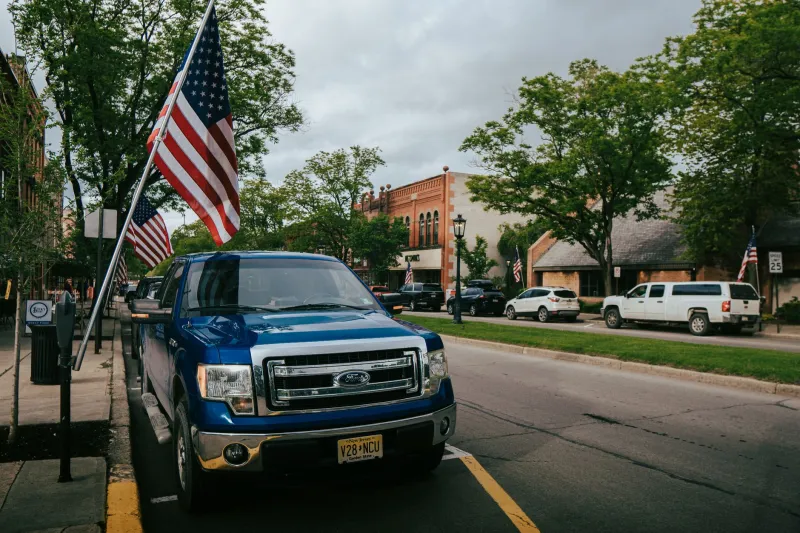
Drive down Main Street in nearly any American town and you will notice a quiet paradox. The big-box chains and delivery apps dominate the skyline of national advertising, yet when a resident pulls out their phone and searches "plumber near me" or "garden center open now," it is often the independent shop down the block that appears first.
This is not luck, and it is not an accident of geography. It is the predictable result of tactics that money cannot easily buy. At RankPilot, we have spent years watching small and mid-sized retailers outmaneuver venture-funded competitors in local and regional search results, and the pattern is consistent enough to be distilled into a framework. Below, we break down why the underdog wins and how to replicate the playbook.
Why Money Does Not Move the Map Pack
Local search operates on a different logic than national organic rankings. Google's local algorithm weighs three pillars above almost everything else: relevance, distance, and prominence. A funded competitor can throw budget at the first, but it cannot buy its way into the second, and the third—prominence in a specific neighborhood—is built through signals that take time and genuine community presence.
Consider what a national brand's local listing actually looks like in practice. A template landing page cloned across 400 cities. A call center answering the phone. Reviews scattered thinly across dozens of locations. Now compare that with a single-location retailer who knows every customer by name, answers the phone themselves, and has accumulated 600 reviews over a decade of doing right by the neighborhood.
The algorithm reads these signals the same way a customer would. Depth beats breadth when the query is local.
The Review Velocity Advantage
One of the most underrated metrics in local SEO is review velocity—the rate at which a business earns new reviews, not just the total count. A funded competitor might have 2,000 reviews accumulated over eight years. A local shop earning 15 reviews a month signals to both Google and prospective customers that the business is active, trusted, and present right now.
The retailers we studied treat review generation as an operational habit, not a marketing campaign. A garden center in Ohio sends a text follow-up two days after purchase. A family-run auto shop in Georgia hands customers a card with a QR code at checkout. Neither spends a dollar on advertising to do it.
Three habits separate the winners:
- Ask at the moment of delight. A customer who just received help loading mulch into their truck is primed to leave a five-star review. The ask happens before they leave the parking lot.
- Respond to everything, including the ugly ones. A thoughtful reply to a one-star review demonstrates service culture publicly, which prospective customers read as evidence of how they will be treated.
- Vary the review content. Ten reviews mentioning "brake repair" strengthen relevance for that service far more than ten generic five-star ratings.
Hyperlocal Content That Corporations Cannot Fake
Funded competitors rely on content templates because templates scale. That scalability is precisely their weakness. A national retailer's "Best Patio Furniture in [City]" page is written by a contractor in another time zone and it reads that way.
The independent retailers winning regional SERPs publish content only a local could write. A hardware store in Minnesota maintains a seasonal guide to ice dam prevention that references specific county weather patterns. A nursery in the Willamette Valley publishes soil recommendations keyed to the region's actual clay content. These pages earn links, shares, and dwell time because they are genuinely useful to a specific community—and no automated content pipeline can replicate that authenticity.
The lesson generalizes: write for the zip code, not the market.
Community Backlinks: The Moat That Cannot Be Purchased
Link building is where funded competitors typically flex. They buy placements, sponsor listicles, and run digital PR campaigns. Local retailers counter with something more durable: relationships.
Sponsoring the high school booster club. Hosting a booth at the county fair. Partnering with the local chamber of commerce. Being cited by the regional newspaper's "best of" feature. Each of these produces a link from a domain with genuine local authority—exactly the kind of link Google's local systems reward and exactly the kind that cannot be acquired through an agency invoice.
A bookstore in Vermont we profiled earns more referring domains from its town's little league sponsor page and library newsletter than most funded competitors acquire in a year for a single location. The links are small, but they are real, relevant, and rooted in place.
The Underdog Framework, Distilled
For retailers operating on a bootstrap budget, the repeatable playbook looks like this:
- Own your Google Business Profile completely. Accurate hours, service categories, photos updated monthly, and posts published weekly. It is free, and most competitors neglect it.
- Build a review engine into daily operations. Systematize the ask, respond to all feedback, and track velocity monthly.
- Publish one genuinely local asset per month. Seasonal guides, local event coverage, neighborhood-specific advice. Quality over cadence.
- Convert community involvement into citations. Every sponsorship, partnership, and local mention is a link opportunity. Log them.
- Track what matters. Monitor map pack visibility for your core service terms, not vanity rankings. This is where RankPilot's local tracking tools earn their keep—knowing whether you moved from position four to position two in the map pack tells you more about foot traffic than any national keyword report.
The Runway Is Not the Moat
Venture funding buys advertising reach, but it cannot buy a decade of goodwill, a genuine neighborhood presence, or the accumulated trust signals that Google's local algorithm was explicitly designed to reward. For American retailers willing to treat local search as an operational discipline rather than an afterthought, the playing field is not just level—it tilts in their favor.
The giants have the budget. The corner store has the map. In local search, the map wins.